


Your coding tools report usage. Argent signs it per agent
Claude Code, Codex CLI and Gemini CLI can send their own usage telemetry over OpenTelemetry. Argent receives it with the agent's key, keeps the counts, drops the content and writes signed records per agent and session, one for each time window.
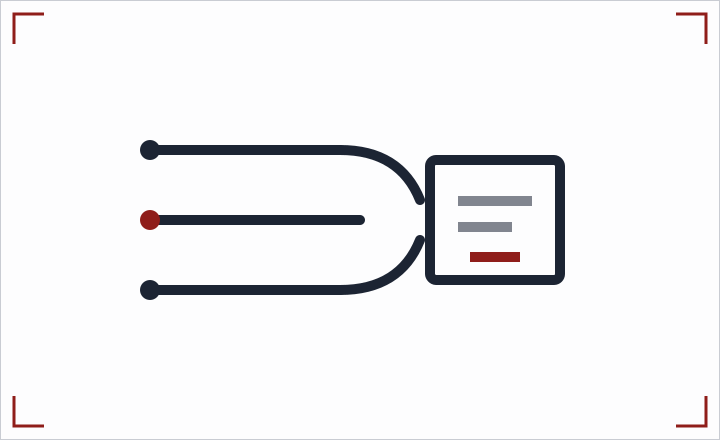
What Argent does with tool telemetry
AI coding tools count their own tokens, cost, requests and tool calls. Argent collects those counts per agent, with nothing else attached.
Coding tools such as Claude Code, Codex CLI and Gemini CLI can export OpenTelemetry. Argent's receiver accepts it and keeps an allow-listed set of counts:
| What Argent keeps | Examples |
|---|---|
| Tokens | Input, output, cache read, cache write and reasoning tokens |
| Cost | The cost the tool reports for itself |
| Activity | Number of requests, request errors and prompts |
| Tool use | Tool calls, and how many were accepted or rejected |
- Content dropped on receipt. Prompt and response text is never stored, whatever the tenant's capture setting says. It is dropped before anything is counted, and only the number of dropped fields is kept.
- People kept as a digest. A user identity in the telemetry is kept only as a per-tenant keyed digest, never the raw value.
- One signed record per window. Counts are rolled up by tenant, agent, session, tool and signal, and each window becomes one signed
telemetryrecord.
What the numbers are, and are not
Telemetry is what the tool says about itself. Argent labels it that way.
- Observed, not metered. These figures are the tool's own claims. They never touch Argent's spend figures, budgets or the money fields on the record.
- Spend comes from the gateway. Budgets and caps work on what Argent meters itself for each request through the gateway. See AI Spend Caps and budget and token spend.
- Attribution comes from the key. The tenant and agent come only from the credential that sent the telemetry. Nothing inside the telemetry can file it under someone else.
- Unknown tools stay unknown. The tools Argent recognizes by name are Claude Code, Codex and Gemini CLI. Another tool's telemetry is filed as "other", never guessed. Metrics that follow OpenTelemetry's GenAI semantic conventions are read too.
How it connects
The tool sends standard OTLP over HTTPS to your Argent gateway, signed in with its own agent key.
| Protocol | OTLP over HTTP |
| Endpoints | /_argent/otlp/v1/metrics, /_argent/otlp/v1/logs, /_argent/otlp/v1/traces |
| Encoding | Protobuf or JSON, plain or gzip |
| Sign-in | The agent's own Argent key, in the exporter's headers |
| Who is refused | A tenant that has not turned telemetry on, a quarantined agent, or an unknown key |
The receiver uses the same sign-in code as the gateway, the decision API and the forward proxy, so there is no second, weaker way in. Requests that are refused write nothing; they are counted by reason.
What you configure
One admin switch, then one command per developer.
- Turn the receiver on. Telemetry is off for every tenant until an admin turns it on in the tenant's policy settings.
- Connect the tool. A developer runs
argent connect <tool>. It registers a per-tool agent under that person, keeps the key only in the keychain, and writes the tool's own config, such as its proxy, key helper, OpenTelemetry exporter and hooks, with a backup. Supported tools include Claude Code, Codex, Gemini CLI, OpenCode, Cursor, Copilot CLI, Kiro, Devin and Cline. - Keep secrets out of config files.
argent otel-headers <tool>prints the exporter's sign-in headers from the keychain for a tool's helper hook, so the key never sits in a config file. - Read it per agent. Each agent's usage lands on the signed record beside everything else that agent did, owned by a named person.
Per-tool setup: Claude Code, OpenAI Codex CLI and Gemini CLI.
Built to take untrusted telemetry
Every attribute in a telemetry export is treated as data from outside.
- Allow-list first. Only the kept fields are read out of a message. An attribute nobody listed is never read, so new content fields a tool adds later cannot slip in.
- Size limits. Bodies are capped before and after decompression, and the number of items per request is capped.
- Per-agent and per-tenant budgets. Item budgets keep one agent or one tenant from flooding the receiver.
- Health you can watch. Open windows, oldest window age, items, drops, flushes and exports are all counted, so a stuck ingest shows up.
Where this fits
Pages that go deeper.
- Coding agents end to end: securing AI coding agents covers the gateway, keys and records around the same tools.
- Capabilities: Shadow AI Discovery, Watch Before You Enforce, One-Click Audit Evidence and all capabilities.
- Goals: See all AI in your company, audit and accountability, compliance evidence and all goals.
- Use cases: rolling out copilots and chat safely and AI in regulated and air-gapped environments.
- Where it runs: air-gapped on-premises, private cloud or your public cloud VPC. Compare them on deployment options.
- Industries: Financial Services, Insurance, Healthcare, Public Sector and all industries.
- More integrations: every system Argent connects to, grouped by type, on the integrations page.
Want this running on your own use cases?
All downloads